All are living in a hyper-connected digital world. Traditional outbound advertising such as intrusive pop-ups, disruptive TV commercials, and cold calling is rapidly losing its pull. Modern consumers demand authenticity, value, and immediate solutions to their pressing problems. This fundamental shift in consumer behaviour is precisely where content marketing steps in as a growth engine for modern enterprises. Rather than pitching products directly, it empowers organisations to attract, inform, and nurture prospective clients by publishing educational, engaging, and authoritative content. Before you hire a Content marketing company in Delhi, you must know the details below.
Understanding Content Marketing: Core Fundamentals, Formats, and Value
What Is Content Marketing?
It is a strategic digital marketing discipline focused on creating, publishing, and distributing relevant, valuable, and consistent content to attract and retain a clearly defined target audience.
Unlike conventional advertising that directly pitches a product or service, content marketing focuses on delivering genuine utility. By addressing user pain points, answering industry-specific questions, and offering practical solutions, businesses establish subject-matter expertise and build sustainable brand trust.
Over time, this value-driven relationship nudges prospects through the conversion funnel, transforming casual readers and viewers into loyal brand advocates.
Primary Types of Content Marketing
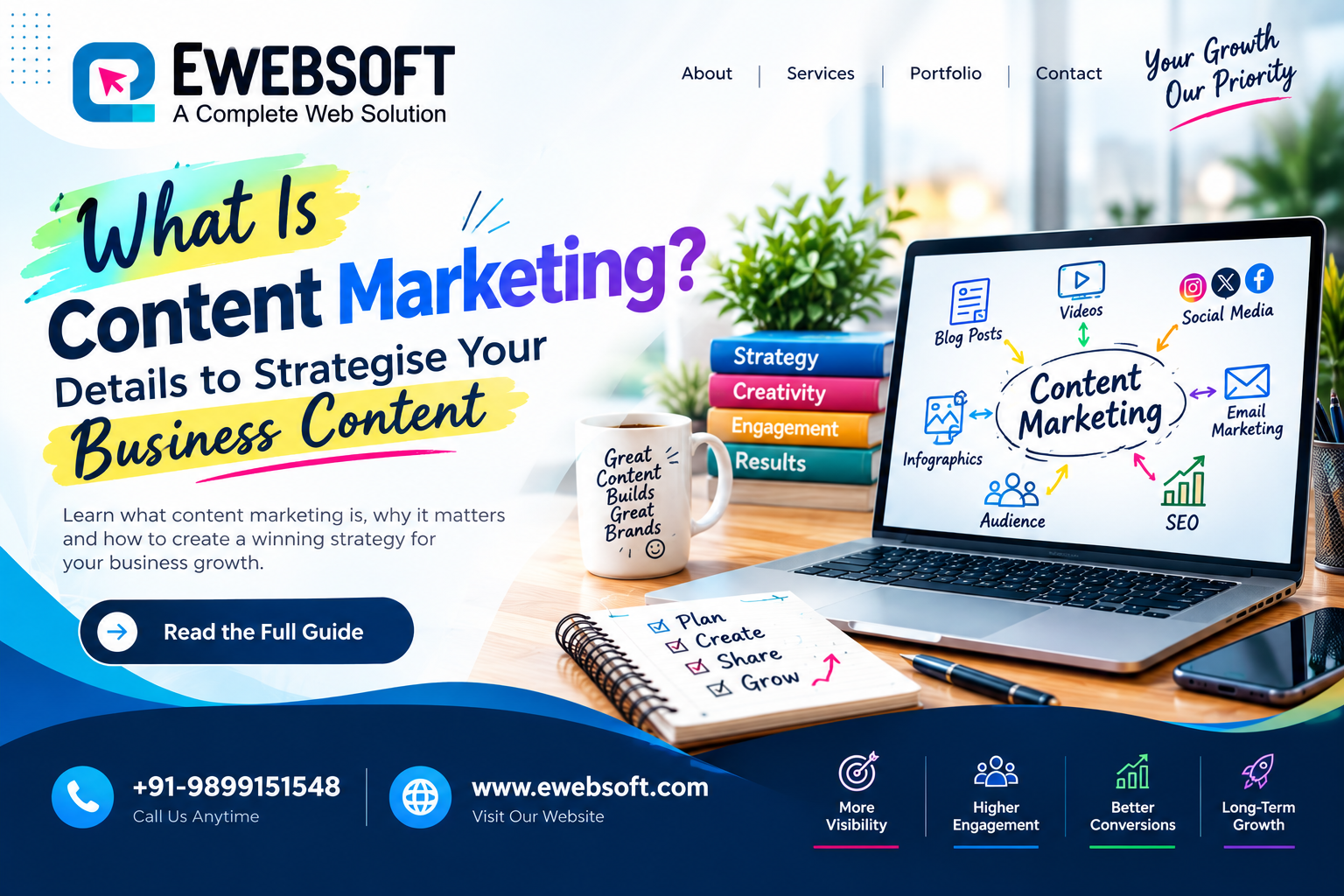
A multi-faceted content approach allows businesses to meet prospects wherever they are in the buyer's journey. The most effective formats include:
Blogging & Articles: The cornerstone of organic search engine optimisation (SEO). Well-researched blog posts answer long-tail search queries, drive steady website traffic, and establish thought leadership.
Video Content: Highly engaging formats ranging from short-form reels and TikTok clips to long-form YouTube tutorials and product walkthroughs.
Social Media Posts: Micro-content tailored for platforms like LinkedIn, Instagram, and X (formerly Twitter) designed to foster direct community interaction and increase brand reach.
Infographics & Visual Media: High-impact visual assets that simplify complex data, statistical reports, or multi-step processes into easy-to-digest formats.
Podcasts & Audio Assets: On-the-go conversational content that humanises brands and builds deep, personal connections with listening audiences.
Gated Lead Magnets: Long-form assets like E-books, whitepapers, case studies, and templates that offer deep insights in exchange for a prospect's email address.
Why Businesses Need Content Marketing
Deploying a consistent content stream offers compounding long-term returns compared to paid advertising models:
1. Drives High-Intent Organic Search Traffic: Search engines prioritise websites that publish helpful, up-to-date, and authoritative content. With a website content marketing service, you get all of this.
2. Builds Brand Trust and Credibility: Educating your audience before asking for a sale positions your company as a reliable industry authority rather than just another vendor.
3. Cost-Effective Lead Generation: It generates significant inbound leads over time while building reusable digital assets that lower customer acquisition costs.
4. Supports the Entire Buyer's Journey: From initial awareness and consideration to final purchase decisions, tailored content guides prospects seamlessly through every buyer persona milestone.
Essential Steps to Strategise Your Business Content
Creating random blog posts or social media graphics without a structured roadmap rarely yields a measurable return on investment. Marketers and business owners need an actionable framework to design, deploy, and scale content that drives real revenue growth.
1. Define SMART Content Marketing Goals
Align every content effort with core business objectives. Establish Specific, Measurable, Achievable, Relevant, and Time-bound (SMART) targets—such as boosting organic site traffic by 35% in six months or generating 150 qualified inbound leads per quarter.
2. Develop Detailed Buyer Personas
Identify your ideal customer profile by documenting demographic data, professional titles, main pain points, decision-making motivations, and preferred media consumption platforms.
3. Conduct Comprehensive Keyword Research & Topic Clustering
Utilise SEO tools to uncover high-intent search terms your target audience uses. Organise these keywords into pillar-cluster topic models to build deep topical authority across search engines.
4. Audit Existing Business Content
Evaluate current digital assets to identify top-performing pieces, content gaps, and outdated posts that need refreshing or repurposing into secondary media formats.
5. Select Appropriate Distribution Channels
Focus your publishing and promotion efforts strictly on the channels where your buyer personas spend their time—whether through organic search, email newsletters, or platform-specific social media networks.
6. Establish a Centralised Editorial Content Calendar
Maintain publishing consistency and avoid last-minute rushes by mapping out topics, assigned writers, content formats, target keywords, and publication dates weeks in advance.
7. Focus on High-Value, Original Content Production
Prioritise quality over pure volume. Ensure every piece of content offers actionable insights, clear formatting, original perspective, and accurate information. You may partner with a Digital marketing Agency for content.
8. Implement an Inbound Content Promotion Strategy
Never rely solely on organic discovery. Amplify your content reach through email newsletters, team advocacy, employee social sharing, online communities, and strategic paid promotion.
9. Track, Analyse, and Optimise Key Metrics
Monitor performance indicators like organic traffic, bounce rates, conversion rates, click-through rates, and social engagement to continually refine your strategy.
Conclusion
Content marketing is no longer just a digital trend. It is a core business necessity for long-term growth, brand equity, and customer retention. By executing a structured content strategy tailored to your target audience's needs, your business can consistently build trust, boost search engine visibility, and scale conversions predictably.