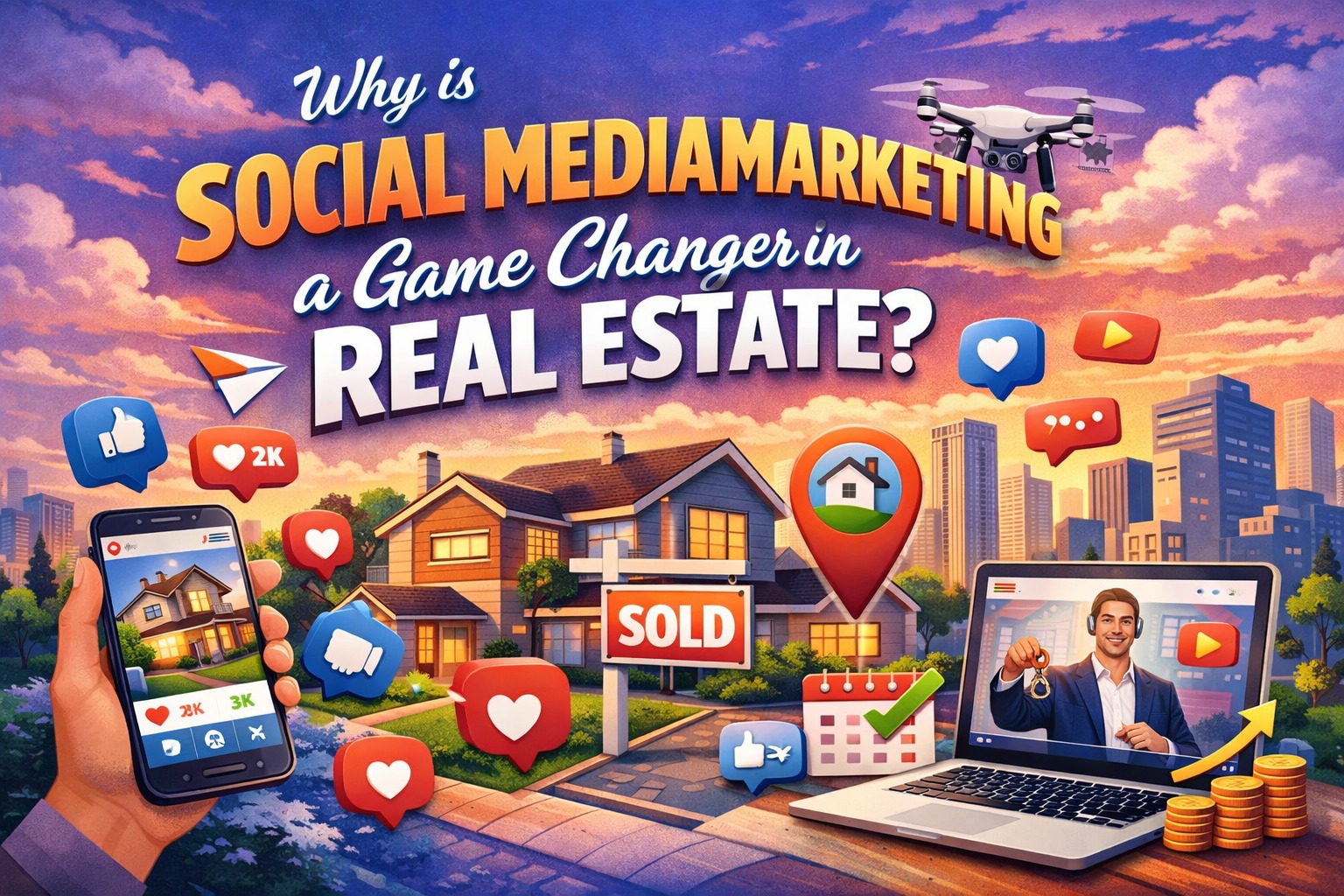
Why is Social Media Marketing a Game Changer in Real Estate?
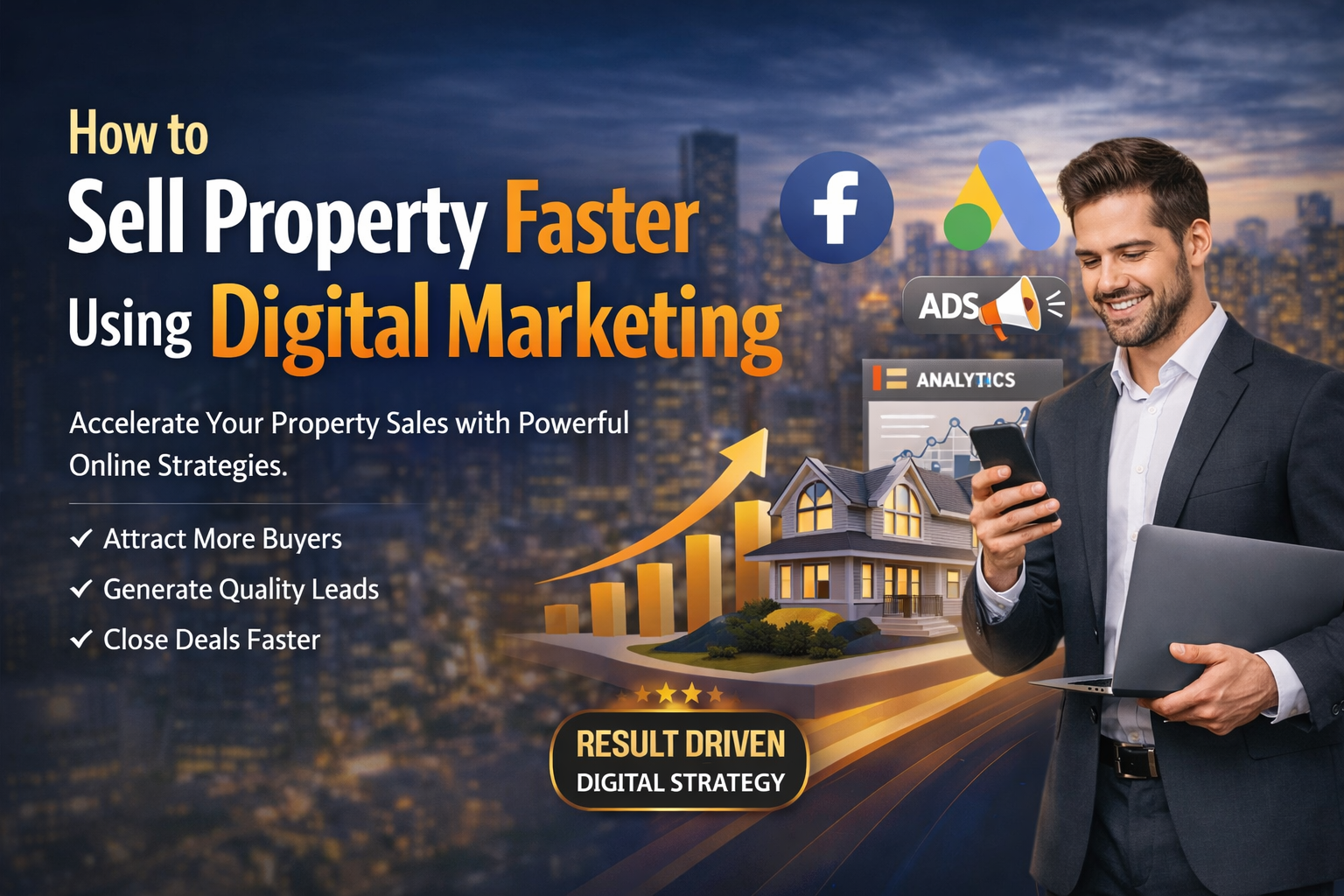
Indian real estate marketing strategy is going through a drastic change. Do you think social media platforms like Facebook, Instagram, WhatsApp, and YouTube are just for entertainment? No, they are not. They have become the best platforms to support your real estate business, whether through showcasing property, video tours and reviews, or running ads. People also love to search “Best Digital Marketing Real Estate Company” online. There are various reasons like these making social media marketing a game-changer in real estate.
In this blog, we will talk about the top reasons so that you can understand their importance of top digital marketing agency for your real estate business
Top Reasons Social Media Marketing is a Game Changer in Real Estate:
Showcasing Property: Social media platforms provide the best ways to showcase a property. You can make a reel, collage, or list to showcase properties. You can also highlight properties through video tours. A video on property tour can showcase your property in the best way through SEO services in Delhi.
Hyper-targeted Advertising: Most social media platforms are famous for their use in hyper-targeted advertising. You have clear options to target customers from different areas, ages, demands and budgets.
Building Brand Credibility: We do many things to build brand credibility. If you are not doing social media marketing services, you are missing a major part. Through daily posts about properties, offers, customer experience and events, you can build your brand credibility.
Instant Interaction & Networking: Social media platforms provide a place for quick interaction with new people even without sharing personal details. Thus, you can build a network of people who are interested in your business easily.
Cost-effective Reach: These platforms have most features available for free. If you want to run ads, then you need to pay money. The ad cost is lower than on other platforms. Thus, it gives a cost-effective way to reach a wider audience interested in your business or information.
Extensive Exposure: Most platforms are available for global audience and your viral posts can get extensive exposure. If you want to expand your business to new areas or globally, these platforms provide great help.
Staying Competitive: If you want to stay competitive in the real estate industry, it may seem impossible without social media marketing. Most real estate companies are already getting the benefits of them. New tools and automation features have taken these to the next level. So you can not ignore this strategy to sell your property.
Real-time Feedback: On social media platforms, people with bad or good experiences do not hesitate to share their feedbacks. Businesses take feedbacks and work accordingly to help customers.
Conclusion
With growing social media users every day, which is already in millions, you can not ignore t heir utilization for your real estate business. Thousands of companies have taken advantage of social media marketing and are doing a good business. Whether its about a selling your flats or plots or growing your brand value exponentially, it is possible with social media marketing services in Delhi.